

We are sharing three ways to apply Milk to have more Peace Lily blooms and unstoppable growth. Keep on reading!
Despite being relatively easy to care for, encouraging consistent flowering and the display of beautiful white bracts in peace lilies can sometimes be challenging.
While fertilizers and other tricks exist, this simple milk solution, readily available in your kitchen, offers a gentle and straightforward way to boost your plant without the risk of over-fertilization.

Why Use Milk on Peace Lily for Blooms?
Peace lilies are celebrated for their glossy foliage and elegant white flowers, but they occasionally need a little encouragement to flower more frequently.
Surprisingly, milk can serve as your secret weapon. Although it might seem odd, milk offers more than just nutritional value for humans; it also possesses nutrients that mimic those found in fertilizers, but in a milder, more natural form.
Milk, when properly diluted and applied, can provide your Peace lily with the necessary impetus to bloom more often. Moreover, it effectively combats fungal infections and pests like mealybugs and aphids. Here’s how to do it!

How Milk Helps Peace Lily for Blooms
Milk’s nutrient makeup holds the key to its effectiveness. While primarily composed of water (approximately 87%), milk also contains calcium (about 120 mg/100 ml) and potassium (around 150 mg/100 ml)—two critical plant nutrients that directly aid in flowering.
As you likely know, calcium strengthens the cell walls, enhancing the plant’s structural integrity and its capacity to produce robust blooms.
Remember that potassium is the true bloom enhancer! It regulates the flow of water within the plant, ensuring that energy is directed toward flower production rather than just leaf growth.
Milk also contains phosphorus and magnesium, which are crucial for root development, bud formation, and overall plant health.
Another advantage lies in milk’s proteins and natural sugars. Proteins degrade into amino acids that can stimulate plant growth. Lactose and fats contribute organic matter that fosters the growth of soil microbes. As we all know, healthier soil microbes result in enhanced nutrient availability and more abundant blooms.
Pro Tip: Always opt for plain, unflavored cow’s milk (whole, toned, or skim versions are all suitable). Steer clear of flavored, sweetened, or non-dairy alternatives, as these can be detrimental to the soil. Plant-based milks do not possess the same mineral content.
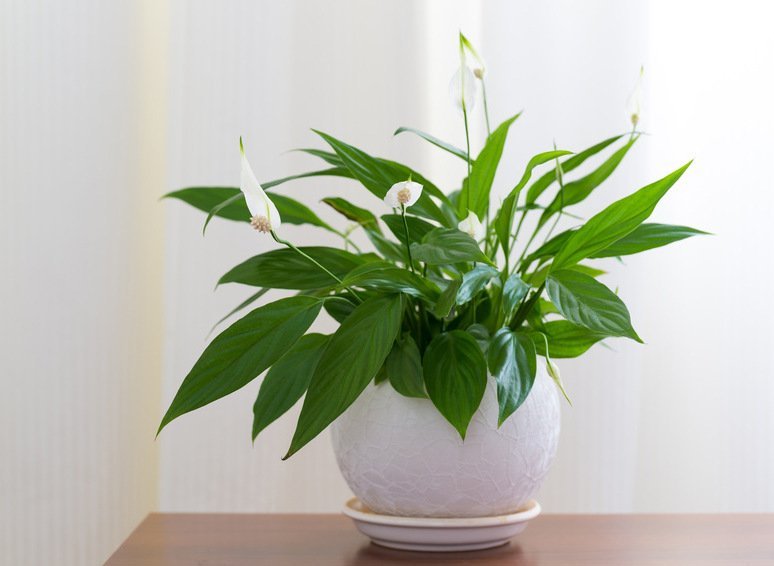
How to Use Milk for More Blooms
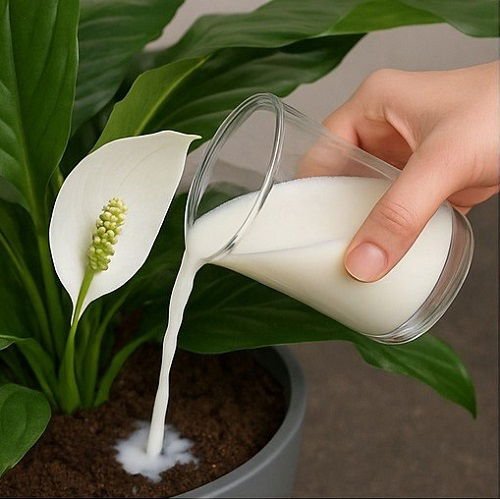
Soil Application
Although straightforward, the process needs some precision. Dilute the milk using a ratio of 1 part milk to 4 parts water to provide nutrients without risking soil acidification or root rot.
Next, pour the mixture into the soil surrounding the plant’s base, similar to your regular watering routine. Applying this solution once every 4-6 weeks during the active growing season is sufficient.
The added calcium and potassium will fortify the roots and encourage bloom production, turning each feeding into a gentle nudge toward more frequent flowering.
Foliar Feeding
For spraying purposes, a more diluted solution is necessary (1 part milk to 6 parts water). Mist the leaves lightly, allowing the plant to absorb the nutrients through its stomata. However, limit this practice to occasional use, as milk may leave behind a residue.
It also offers protection against fungal diseases like powdery mildew. Milk contains proteins (lactoferrin and β-lactoglobulin) that, when exposed to sunlight, generate compounds with mild antifungal effects. This creates a light protective coating on the leaves, which slows fungal spore growth.
Pro Tip: Spray in the morning to allow the leaves to dry before nightfall, and position your peace lily in a location with partial sunlight and good air circulation.

Leaf Shining
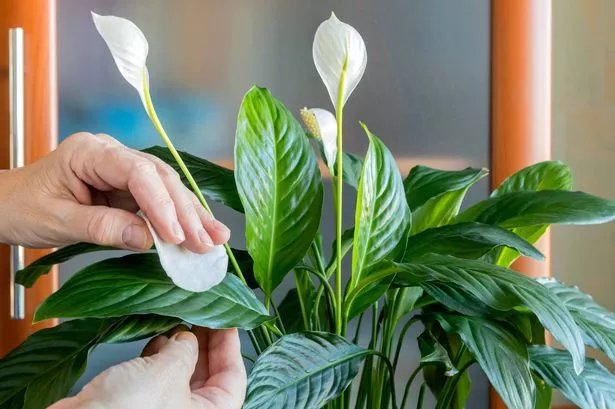
Diluted milk can also serve as a natural leaf polish for Peace lilies. The proteins present in milk delicately cleanse the leaf surface, eliminating dust and residue that obstruct sunlight. Consequently, this facilitates greater light absorption, enhancing photosynthesis and enabling the plant to generate the energy required for profuse flowering.
Simply wipe the leaves occasionally with a soft cloth dampened with a very diluted milk-water solution to observe a glossy finish and improved vitality.
Note: Always move the plant outdoors before spraying and allow the leaves to dry completely in bright, indirect light before returning it indoors. This prevents lingering residue or odors.
When and How Often to Use Milk
Milk is not a daily requirement for your Peace lily; rather, it’s a monthly indulgence. Applying it once every 4-6 weeks is sufficient. Overuse could lead to soil souring, unpleasant odors, or even the development of fungal problems.
The ideal time to use milk is during the Peace lily’s active growth and blooming period, which extends from spring to early fall.
During these months, the plant is naturally primed to produce flowers, so the additional calcium and potassium are directly channeled into supporting more abundant and longer-lasting blooms and growth.
During the winter months, when the plant’s growth slows, refrain from milk feeding and any other fertilization methods; instead, maintain light watering. Furthermore, consider the plant’s overall condition:
- If the plant is leafy but not flowering → milk water could help stimulate flowering.
- If the plant appears droopy, exhibits brown tips, or experiences root issues → address the watering, lighting, or repotting needs first. Milk cannot resolve problems caused by stress.
Pro Tip: Apply diluted milk after pruning spent blooms. This provides the plant with a nutrient boost as it prepares to produce new flowers.

Conclusion
In summary, using milk on your Peace Lily can be an effective and natural way to enhance blooming and improve overall plant health. By providing essential nutrients such as calcium and potassium, milk not only encourages flower production but also promotes robust root development and combats pests and fungal diseases. Whether through soil application, foliar feeding, or leaf shining, incorporating milk into your care routine allows you to nourish your Peace Lily responsibly. Remember to use the right dilution ratios and frequency, and be mindful of the plant’s overall condition to achieve the best results. With these strategies, you can enjoy a vibrant Peace Lily with an abundance of lovely blooms.


