

Pruning is an essential gardening practice impacting the health and yield of your pepper plants. Gardeners often prioritize watering, fertilizing, and pest control, but pruning is frequently neglected. Topping, a specific pruning method, involves cutting the upper section of the plant. While seemingly counterproductive, this technique results in a fuller plant and a larger harvest. Gardeners can maximize the plant’s potential and have a more successful growing season by understanding topping’s principles.
Understanding the Benefits of Topping Pepper Plants
Topping pepper plants encourages branching, which leads to more flowers and, therefore, more peppers. Removing the plant’s top leads to lateral shoot growth. The result is a fuller plant with a larger photosynthetic area, improving the plant’s overall health. Additionally, a fuller plant is more stable and less likely to fall over due to the weight of the peppers. By encouraging a stronger structure, topping also boosts air circulation within the plant, decreasing the possibility of fungal diseases.
Top Reasons to Cut Off the Tops of Your Pepper Plants
Increased Yields Through More Branching Topping stimulates the plant to produce side shoots, creating more branches. Each new branch can produce flowers and, eventually, peppers. This branching effect allows a single pepper plant to produce significantly more peppers during the growing season compared to an untopped plant.
Better Height Management You can manage the plant’s vertical development by cutting off the top of the main stem. This is especially advantageous for small gardens, indoor growing, or raised beds where overly tall plants may be challenging to manage or block sunlight from other plants. Also, it is simpler to inspect and harvest from compact plants without harming them.
Increased Resistance to Wind and Rain A bushier, properly branched plant has a sturdier structure and a lower center of gravity. This increases its resistance to damage from heavy rain or strong winds, which can easily break tall, leggy pepper plants. The denser canopy also aids the plant in recovering more rapidly from environmental factors.
Improved Airflow and Light Penetration Topping creates a more open and evenly spaced canopy, which enhances airflow around the foliage. This reduces the chance of fungal diseases and ensures that light reaches more of the plant, promoting healthier growth overall.
More Uniform and Aesthetically Pleasing Shape Topped plants generally develop into well-rounded and symmetrical forms. This makes the garden more appealing and contributes to a more organized and easily maintained planting arrangement. Uniformity is especially valued in urban or ornamental gardens where visual appeal matters.
Earlier Fruiting (in Some Cases) Though it may seem paradoxical, topping can sometimes result in earlier fruiting by shifting the plant’s focus away from vertical growth and towards reproductive development. The redirection of energy to lateral branches may accelerate flower formation under ideal conditions.
Step-by-Step Guide to Topping Pepper Plants
Wait for the Right Time Make sure your pepper plant is mature enough before topping. Ideally, wait until the plant has 6 to 8 true leaves, indicating it has a root system strong enough to withstand pruning.
Identify the Main Stem Find the central, vertical stem that serves as the plant’s primary growth point. This is the area where you will cut.
Locate the Cutting Point Locate the second or third pair of true leaves from the plant’s base (true leaves are the fully developed leaves that appear after the initial seedling leaves). Choose a location immediately above one of these pairs.
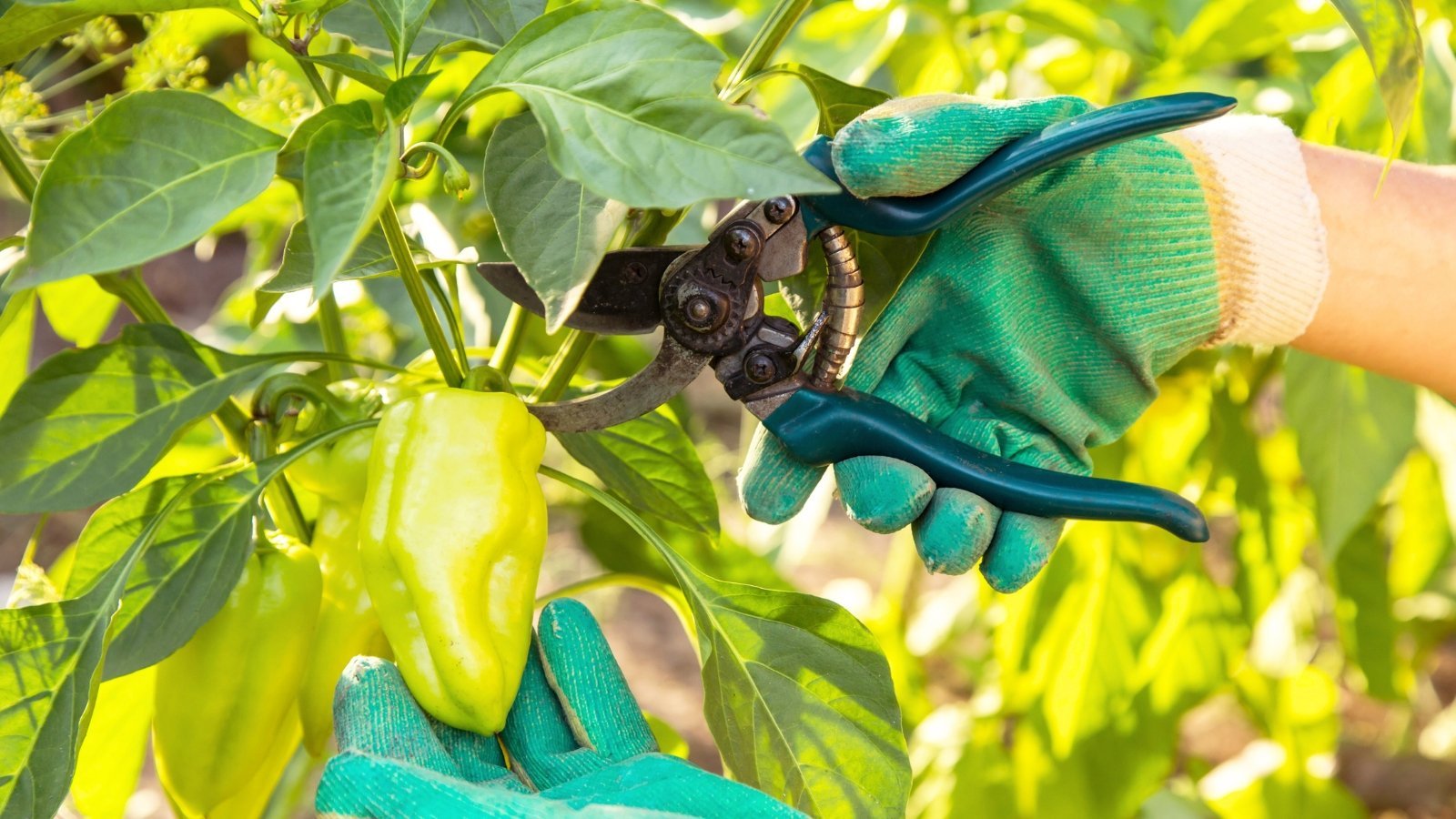
Use Clean, Sharp Tools Choose a pair of sharp pruning shears or scissors and disinfect them using rubbing alcohol or a bleach solution to prevent the spread of disease.
Make the Cut Above a Leaf Node Cut the main stem just above a leaf node (the point on the stem where a branch or leaf grows). This is essential, as new branches will develop from the nodes below the cut.
Remove Only the Top Growth Take care not to remove too much of the plant. You are only removing the upper area to promote fuller growth, not to completely stunt the plant.
Monitor for New Growth After topping, watch for new shoots emerging from the leaf nodes below the cut. Eventually, these will develop into multiple main stems, increasing yield.
Adjust Care as Needed Following the cut, make sure the pepper plant receives: Adequate sunlight (6–8 hours per day) Consistent watering (keep soil moist, not waterlogged) Balanced nutrients (think about using a light fertilizer to help with regrowth)
Optional: Stake or Support if Needed The plant may require support to stay upright and prevent breakage as it grows bushier, especially in windy or crowded environments.
Repeat if Desired You can top again to further control and shape growth once the plant recovers and new branches emerge, but take care not to overstress the plant.
:max_bytes(150000):strip_icc()/GettyImages-1095192334-2000-2fd3e104b8ef4c629bf67506115005e7.jpg "This is totally news to me.")
Common Mistakes to Avoid When Pruning Pepper Plants
Topping too early before the plant has enough leaves to sustain new growth is a frequent mistake. Cutting too low on the plant, which can stunt its growth, is another common error. Additionally, using clean tools is crucial to prevent the spread of disease. Over-pruning is another risk; removing too much foliage can stress the plant and impair its capacity for photosynthesis. Finally, neglecting to monitor the plant following topping can result in missed chances for further shaping and care.
Conclusion: Enhancing Your Pepper Plant Growth
Topping your pepper plants can revolutionize your garden. You can foster healthier, fuller plants that produce more peppers by comprehending and applying this method. It takes a little work and care, but the benefits are definitely worth it. You can improve the growth of your pepper plants and have a large harvest by avoiding common blunders and adhering to best practices. Topping is a useful technique to add to your gardening skills, whether you’re a novice or an experienced gardener. `


