

Here are 5 sure-shot tricks to grow bushier pothos without any pruning at all! Adopting these methods is straightforward and requires minimal effort.
Achieve a fuller, healthier pothos without using scissors by implementing simple techniques. Try these methods to encourage bushier growth in your pothos, without pruning the vines, and observe as it naturally becomes more dense.
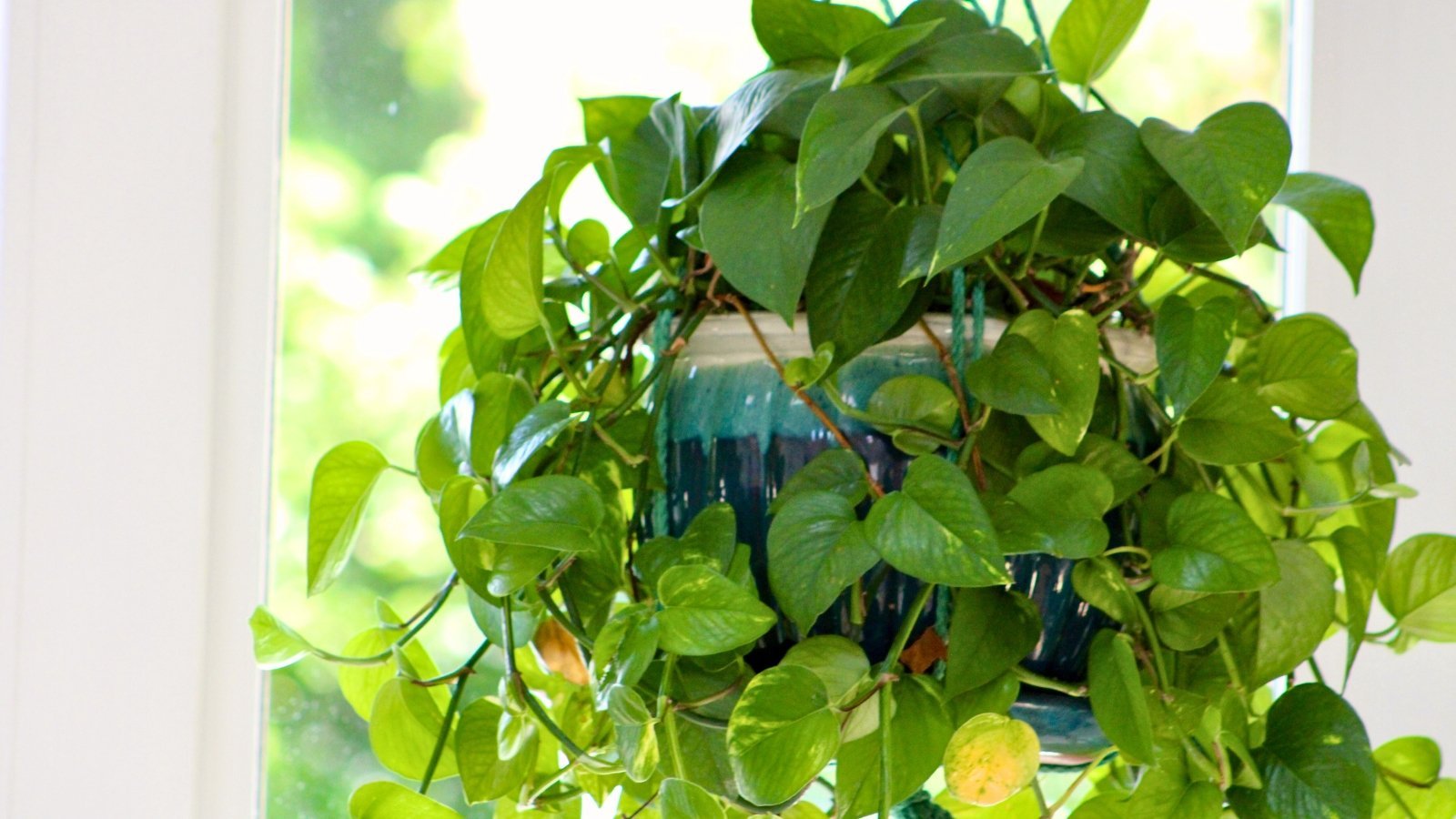
Tricks to Grow Bushier Pothos Without Cutting Any Vines
Coil the Vines to Trigger New Growth Without Cutting
One effective strategy for promoting a bushier pothos is to position the extended tendrils directly onto the soil surface. When nodes make contact with damp soil, they will naturally generate roots, potentially leading to the development of new leafy shoots from each rooted node. Typically, new roots emerge within 2–4 weeks.
This approach eliminates the need for pruning. Simply loop or coil the vines around the base of the plant, creating a wreath-like arrangement. To accelerate this process, gently press the nodes into the soil using hairpins or floral wire. Once the nodes take root, they will independently generate stems and leaves, adding density to the base in a manner akin to natural layering.
Pro Tip: Enhance root formation by lightly scratching the underside of each node with a toothpick before pressing it down.
:max_bytes(150000):strip_icc()/how-to-make-pothos-fuller-5324082-hero-57b72aa5638a4653a938b6130d555dac.jpg)
Micro-Feed Your Pothos Like a Pro
Instead of fertilizing your pothos with a strong dose once a month, switch to administering smaller, more frequent doses every 10–12 days. Utilize a balanced liquid fertilizer at one-fourth the recommended concentration and dilute it further with lukewarm water.
This creates a consistently nutrient-available environment which encourages consistent node activity and stimulating the growth of new shoots rather than elongated, sparse growth. This frequent yet gentle feeding signals an abundance of resources to the plant, encouraging it to develop more compact and dense growth instead of stretching towards the light with few leaves.
This is particularly useful for homes with limited light, where growth may otherwise become elongated and sparse. Adding a drop of seaweed extract or fish emulsion monthly can also provide natural growth hormones to boost branching.
Consider brands like Schultz Liquid Plant Food or explore DIY seaweed solutions as alternatives. Go with these DIY options!

Bounce Light to Wake Up Hidden Growth
Pothos plants tend to be dense at the tips and sparse at the base simply because light only reaches the upper vines. Correct this by using reflective surfaces, such as white foam boards, mirrors, or even aluminum foil, placed behind and beneath the pot, to redirect light onto the lower nodes.
This method simulates all-around natural light, which can further stimulate inner nodes to activate, encouraging more growth. Near a window, but away from direct sunlight, can maximize its impact. Remember to rotate the pot every few days for equal distribution of light across all areas.
Fun Fact: Numerous pothos varieties thrive even in low-light environments.
A small clamp with a daylight bulb (5000–6500K) can also be utilized to mimic dappled sunlight in dimly lit areas. With time, the nodes closer to the soil will start to grow new vines, thus resulting in a more dense appearance without needing to prune.

Switch to a Shallow, Wide Pot for Instant Volume
Pothos plants are mostly cultivated in deep, vertical containers, which encourages long and trailing growth patterns. Changing to a wider and shallower pot with proper aeration can increase their bushiness.
These types of pots permit the plant’s lateral expansion and the improved air circulation encourages growth in several directions instead of just upward.
Changing to a pot with dimensions around 8–10 inches and a depth of 5–6 inches can significantly affect the plant’s development pattern.
Pro Tip: To help ensure aerial root development without overwatering, consider combining this with moss or coco husk mulch to maintain a stable surface humidity.
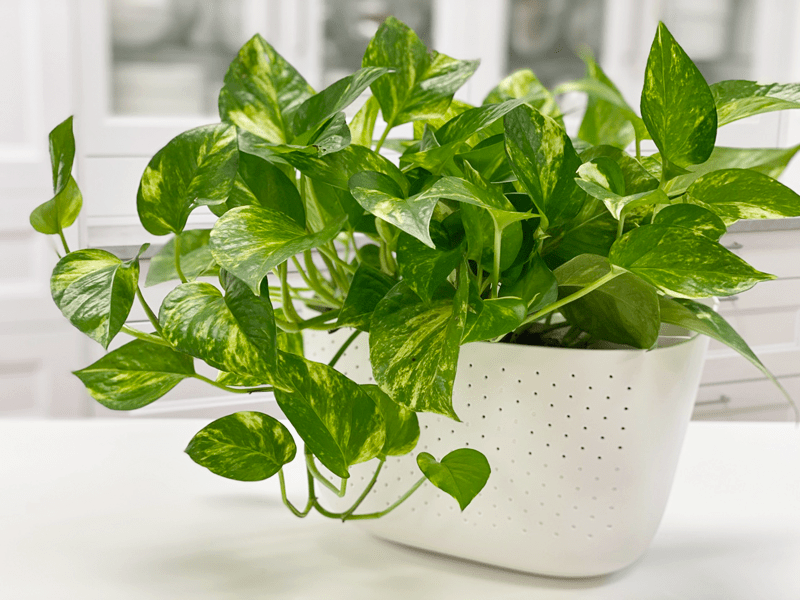
Mimic Rainforest Humidity for Bushier Growth
While altering humidity may not initially seem like a direct method to attain a more dense pothos, oscillating between daytime and nighttime humidity levels can stimulate more compact and branched growth.
Sustain higher humidity levels (approximately 60–70%) during the day by utilizing a pebble tray or humidifier. During the night, switch off humidifiers or boost airflow to permit humidity to drop to approximately 40–45%.
The elevated daytime humidity supports leaf plumpness and facilitates aerial root activation, while lower nighttime humidity signals the plant to slow down expansion. Despite appearing lush, plants grown in constantly humid environments often have leggy growth.
Conversely, controlled variations foster tighter internodes. For best results without additional tools, consider grouping the plant with other humidity-loving plants to establish a microclimate.

Conclusion
By applying these five innovative strategies, you can successfully encourage your pothos to grow bushier without the need for pruning. Positioning vines to take root, practicing micro-feeding, utilizing reflective surfaces for light distribution, opting for wider and shallower pots, and managing humidity levels will collectively contribute to a fuller and denser appearance. These techniques not only enhance your plant’s overall health but also mimic its natural environment, fostering vigorous and lush growth. Embrace these methods, and watch your pothos thrive in its newfound vibrancy!


